The Story Prompt was Campfire Tales. I chose a different character’s point of view
Tales by the Fire
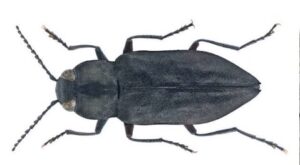
Hi. The name’s Scorch. To you humans, I’m known by different names. You, who are entomologists, call me melanophila acuminata. The rest call me by my familiar name, Black Fire Beetle, the reason being that I love fire. I can sense freshly burned wood from miles away.
You don’t get many forest fires, so you would think that feeding and breeding sites would be hard to find. However, I’m one of the lucky ones. I live in this forest that has lots of campsites. And what do people do when they are camping out? They make campfires all year round.
When you hang around campfires all the time, you hear things. People love sharing their tales of woe, of joy, of mishaps, and especially of things that should not be shared with those with weak hearts.
Well, why don’t I let you decide for yourself…
It was a dark and foggy night. There weren’t many stars visible in the sky when the three of them, one old man, one middle-aged woman, and a teenager, came to sit by the campsite.
The teenager was the know-it-all; he knew exactly how to start the fire. That was music to my ears.
It didn’t take long before the fire was roaring, calling out to me. I hoped their stories would be short, that they would put out the flame, and I could take over. That was not to be the case. The old man started up the first tale, and this is what he shared:
——-
“Did I ever tell you about the time my best buddy and I came up in these woods and what happened to us?”
The others just shook their heads no.
“Well, it was a night just like this,” he started. “Me and Ron came up here just to spend the night. We didn’t have much experience camping, but Ron reassured me: “What could possibly go wrong?” was what he said.
What we didn’t plan on was that, though we had cans of food, we brought no implements to open them. We did, however, have a jar of peanut butter, which ended up being all we ate. Peanut butter makes it hard to talk; it gets stuck everywhere, making it hard to share stories.
Then, of course, there were the bears. It seems that bears in this neck of the woods aren’t particular about what food they get to eat. Even still, it seemed that peanut butter was at the top of their favorite list.
We sealed ourselves in the tent that we had brought along to protect ourselves when it began to rain. Do you know what happens inside a tent when it’s raining outside and you touch the inside top of the tent?
The teenager was quick to answer. “Doesn’t the water leak through?”
“You betcha’, son. There wasn’t a dry spot left in the tent for us by the time the rain finally stopped. Everything was sopping wet.”
The old man continued his story until he came to the end, where they were picked up by Ron’s father.
———
Scorch continued with the woman’s tale – I remember the woman called out just as the old man ended his story.
“That’s nothing,” she called. “Did I ever tell what happened to my second husband?”
“The boy nodded his head no. The old man just smirked and muttered, “He got what he deserved.”
“That may be true,” the woman said, “But I wouldn’t wish that on anyone.”
Scorch continued the woman’s story:
“It had to do with this very same campsite. It seemed that the second husband of this woman and she did not get along with each other very well. From what I could gather from the story, her husband had been cheating on her, but he denied it. She was the one who suggested going on this camping trip to work things out. Well, one thing led to another, and they both went to their separate sleeping bags that night. Somehow, a poisonous snake found its way into her husband’s sleeping bag that night, and by morning, he was found dead. The woman had been distraught.
It was determined to be death by accident. The woman said that she was lucky to have had the support of her husband’s best friend after the death.
Again, the old man smirked. “Is that why you married your husband’s best friend, a month later?”
“You mean my dad?” said the teenager.
“Yes,” said the woman. “I thought you knew.”
“I’m not sure I knew the whole story,” was her son’s reply.
Scorch went on, “And then there was the kid’s story.”
———
“I’m sure you’d love to hear about that. It had to do with fire, which should have been something I liked; however, it also had to do with dead bugs, which I certainly did not like. There was a girl involved; the two of them were where they weren’t supposed to be, things got out of hand, a fire started, and forest rangers got involved, there were helicopters, and lots of people searching the woods for something. You’ll have to use your own imagination to figure that one out. Right now, I’m smelling another campfire about to go out, so I have to go. As to yours, it looks like it might be getting a little too big. You might want to attend to it. I’m sure you know how to handle it. What could possibly go wrong?”